Madison Senior Advisor
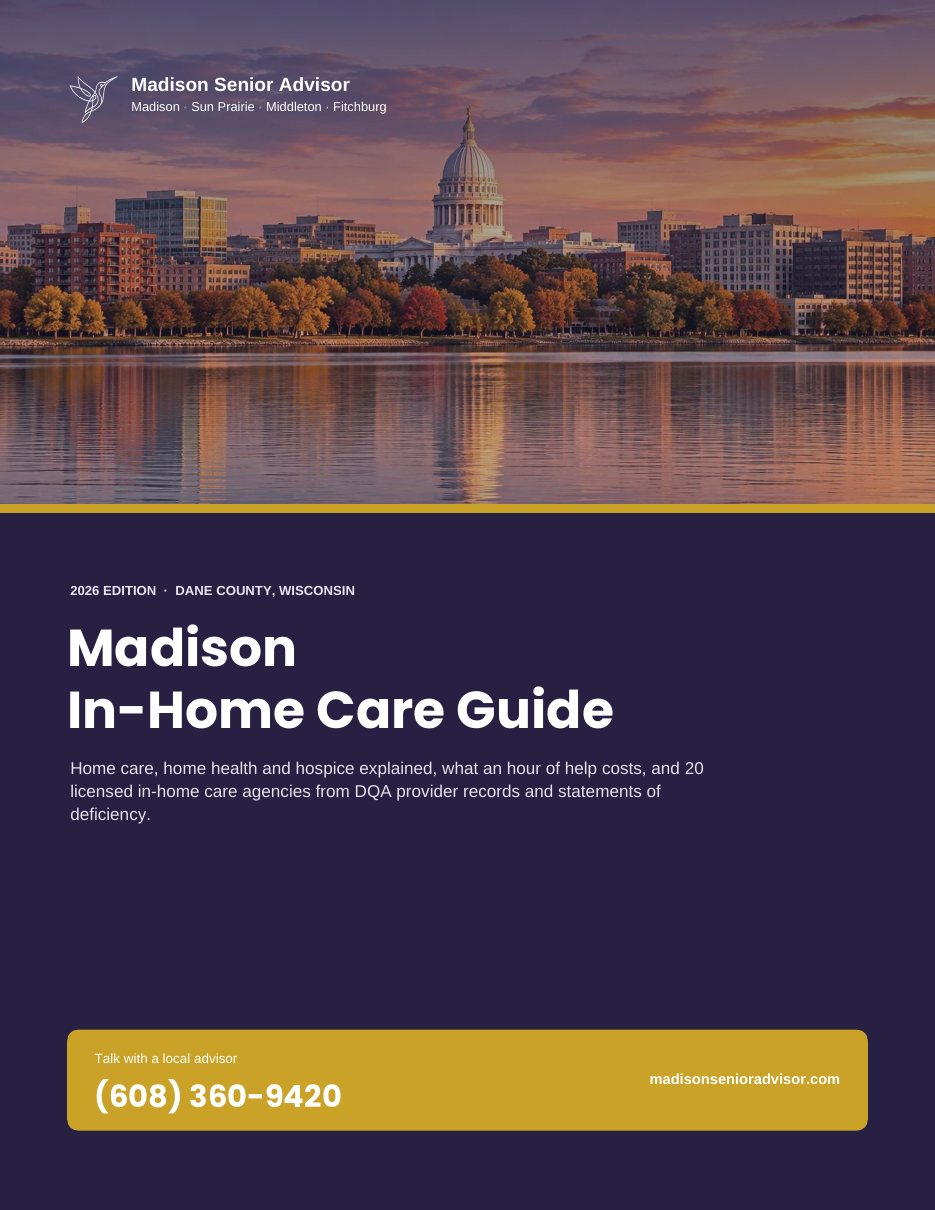
PDF, 7 pages, 2026 edition. Data as of November 15, 2026.
What is in the Madison In-Home Care Guide?
Inside the PDF:
- The difference between in-home care, home health and hospice, and who pays for each.
- How Wisconsin licenses non-medical home care (Home health agency (DQA) and personal care) and what it requires of caregivers.
- 20 licensed agencies, 8 Medicare home health agencies and 6 hospices serving Dane County.
- What 12, 20, 40 and 168 hours a week cost at the state median rate.
- An agency interview checklist to print.
What is the difference between in-home care, home health and hospice in Wisconsin?
In-home care is non-medical help from a licensed home health agency (dqa) and personal care agency; home health is skilled, doctor-ordered care; hospice is comfort care near the end of life.
| Type | What it covers | Who usually pays |
|---|---|---|
| Home care (personal care) | Help with daily living and supervision | Paid out of pocket in most cases |
| Home health | Nursing, physical or occupational therapy after an illness | Medicare Part A or B if eligible |
| Hospice | Pain and symptom relief near the end of life | Medicare, Medicaid or insurance |
How does Wisconsin license in-home care agencies?
Skilled nursing and therapy at home come from home health agencies licensed by DQA and certified by Medicare; hands-on personal care comes from personal care agencies or, under IRIS, from workers the participant hires; hospices hold their own license.
- Home health: a DQA license, and Medicare certification if Medicare is to pay.
- Caregiver background checks under Wisconsin's caregiver law.
- Personal care limited to non-skilled help such as bathing, dressing and meals.
- Skilled care only under a doctor's plan.
How many in-home care agencies are licensed in Dane County?
The DQA record shows 20 licensed home health agency (dqa) and personal care agencies with an address in Dane County, retrieved November 15, 2026. CMS lists 8 Medicare-certified home health agencies and 6 hospices in the same area.
Most offices are in Madison (13), Middleton (2), Cottage Grove (1) and DeForest (1). Agencies often cover towns well beyond their office, so ask.
What does in-home care cost in Wisconsin?
CareScout's 2025 Cost of Care Survey (Wisconsin) puts the Wisconsin median for a non-medical home care aide at about $36.00 an hour. That makes 20 hours a week about $3,120 a month and 40 hours about $6,240.
| Schedule | Hours a week | About per month |
|---|---|---|
| Three 4-hour visits a week | 12 | $1,872 |
| Four hours every weekday | 20 | $3,120 |
| Eight hours every weekday | 40 | $6,240 |
| 44 hours a week (the survey basis) | 44 | $6,864 |
| Around the clock | 168 | $26,208 |
Compare high-hour schedules with assisted living, whose Wisconsin median is $6,540 a month.
Does Medicare pay for in-home care in Wisconsin?
No. Medicare pays for home health, which is skilled, part-time and ordered by a doctor, and for hospice. It does not pay for ongoing non-medical help such as bathing, meals and supervision.
Private pay: Agencies bill by the hour, often with a minimum visit.
IRIS: Self-directed budget to hire workers, including some relatives.
Family Care: Personal care and supportive home care for members.
What public help exists for staying at home in Dane County?
Family Care, through Community Care, Inc., Inclusa, Lakeland Care, Inc., My Choice Wisconsin, and the self-directed IRIS program pay for personal care and supportive home care for people who meet the functional and financial rules; the ADRC of Dane County (608-240-7400) handles the screen and enrollment. There is no PACE program in Dane County.
Would you rather talk it through?
If you are unsure whether you need home care, home health or something else, a short call sorts it out.
(608) 360-9420More free downloads
Who publishes this guide, and how is it paid for?
Madison Senior Advisor writes and pays for it. We are a local placement and referral service, so our income is a referral fee from the provider a family chooses, never a charge to the family.
No listing is paid for: every name comes from the Wisconsin Department of Health Services, Division of Quality Assurance (DQA) record. Treat the guide as general information, and confirm a license with the state before you sign anything.